
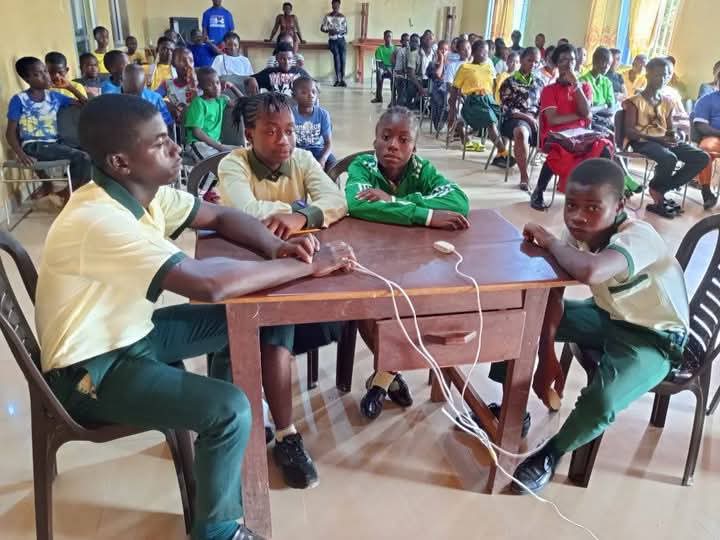
Case Study 2: Igniting a Movement with Youth Leaders
How do you make climate science engaging for high school students? You turn it into a competition. In partnership with the Gbarnga YMCA Youth Council, we launched the Climate Justice Quiz Tournament for our five partner high schools.
This wasn’t just about winning. It was a strategic tool for movement-building. The tournament created a buzz across campuses, making climate literacy cool and collaborative. The 100+ “Climate Ambassadors” we trained took the lead, studying together and sharing their knowledge with peers. The event reached hundreds more students and their families, embedding climate action into the school community.
This “hub-and-spoke” model, where trained youth leaders become catalysts is proving highly effective. The student-led projects that followed, from campus clean-ups to waste management initiatives, demonstrate a powerful sense of ownership. We are not just teaching about climate change; we are providing a constructive channel for young people’s energy and concern for their future, building a generation of environmental stewards. Case Study 1: From Helplessness to Agency in David Dean Town
David Dean Town, a vital gold mining hub 74km from Gbarnga, faces immense environmental challenges. Despite difficult road conditions, our team was met with a powerful desire for change. The women, youth, and elders were tired of seeing their land and water degraded without recourse.
Through our Community Climate Justice Seminar, we didn’t just lecture; we listened. We facilitated a dialogue where community members shared their experiences and fears. Then, we equipped them with knowledge of Liberia’s Environmental Protection and Management Law. We walked them through the process of documenting pollution and filing official complaints.
The result was transformative. A “Community Climate Legal Advocacy Committee” was formed, not by us, but by them. They are now the local watchdogs, proactive and organized. This is the shift from helplessness to agency—the core of legal empowerment. As one community elder stated, “Before, we thought the powerful interests were untouchable. Now, we know the law can be our tool.”